Motherhood drives the fantasy
The wolf traits matter through everyday decisions about medicine, housing, food, and school.
MovieLinks Film Guide
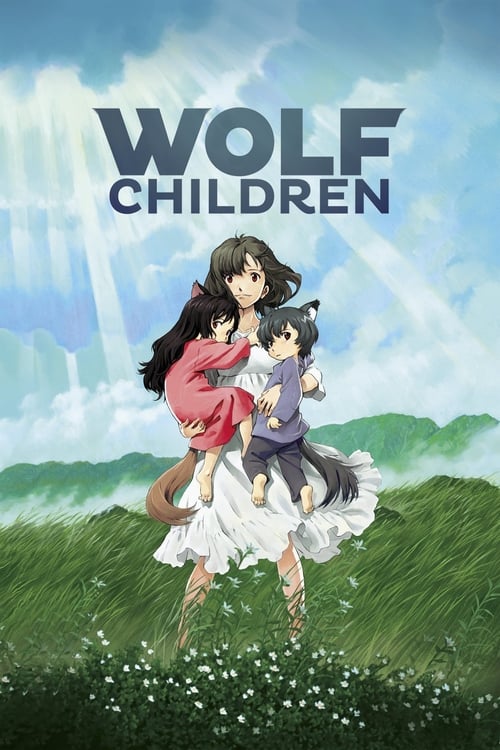

After the death of her wolf-man partner, Hana moves to the countryside and raises Yuki and Ame while each child chooses between human and wolf life.
Wolf Children follows Hana through thirteen years of raising half-wolf siblings Yuki and Ame in secrecy, from an isolated city apartment to a rural home where each child can decide how to live.
Wolf Children finds fantasy in ordinary parenting labor, making food, illness, weather, school, and letting go more important than explaining the supernatural.
The film covers enough years for parenting to change repeatedly. Problems that begin as infant safety become questions of education, community, identity, and independence.
Hana's resilience is practical rather than invulnerable. She studies, fails at farming, accepts advice, and continues while grief remains part of the household.
Yuki and Ame avoid a simple nature-versus-culture split because their preferences change. The outgoing wolf child becomes comfortable among humans, while the timid boy grows into the mountain.
The ending is emotionally difficult precisely because neither choice is framed as betrayal. Hana's task is to recognize two valid forms of adulthood and release her children toward them.
Hana protects both possibilities for her children, then discovers that love cannot require Yuki and Ame to choose the same life.
The wolf traits matter through everyday decisions about medicine, housing, food, and school.
Yuki and Ame's personalities change rather than merely revealing fixed destinies.
Hana's independence becomes sustainable only when she accepts knowledge and help from neighbors.
The final separation completes Hana's parenting arc without suggesting her work or grief has ended.
Mamoru Hosoda's family drama treats transformation as childhood possibility, then follows the harder years when Yuki and Ame must choose identities their mother cannot choose for them.
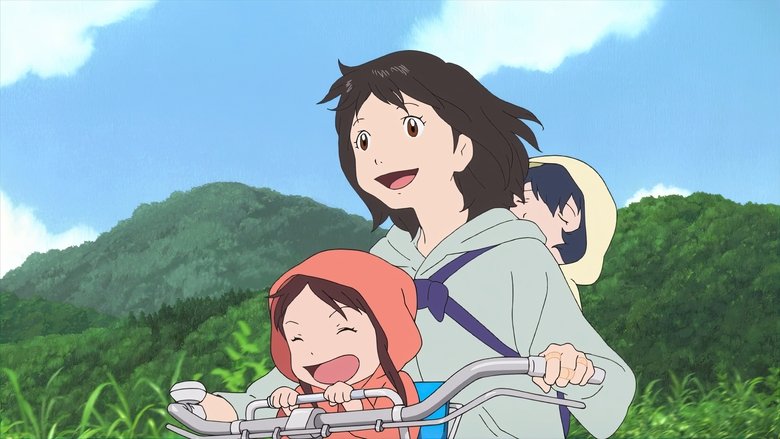
Loving a wolf man requires trust in a secret life, and the births of Yuki and Ame make that secret part of every practical parenting decision.

His sudden death leaves Hana grieving while caring for two infants whose human and wolf bodies create needs no handbook or institution can address.
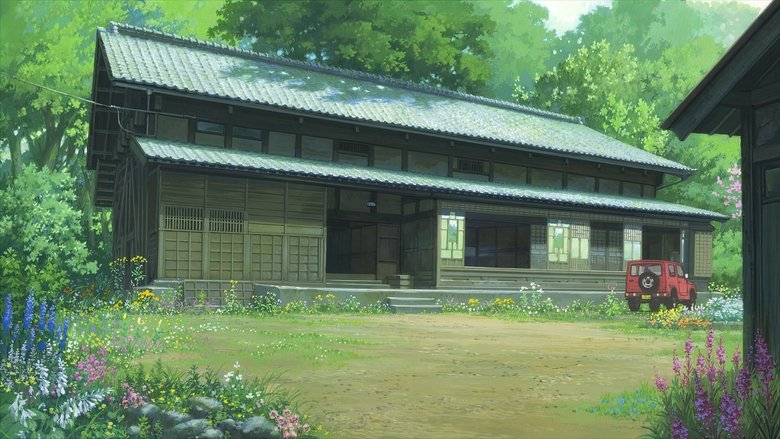
Noise complaints, vaccinations, illness, and accidental transformations make the apartment increasingly impossible for a family that cannot explain itself.
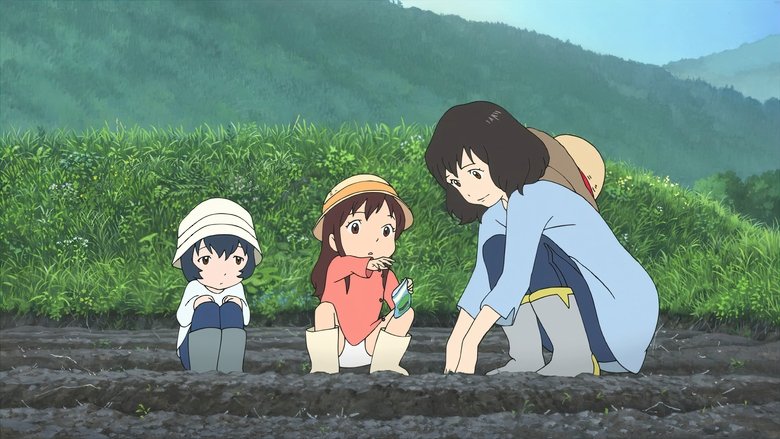
Hana repairs an isolated home and learns to farm, gradually receiving support from neighbors without having to reveal every detail.

The child who once loved running as a wolf adapts to school, builds friendships, and learns to control the side of herself that could expose the family.
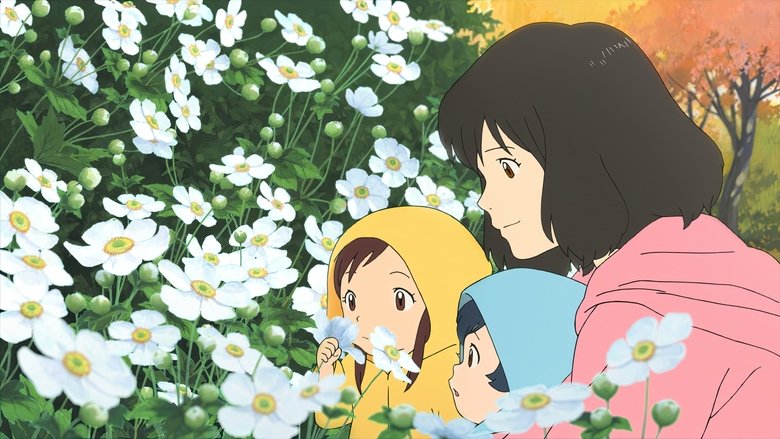
Formerly timid Ame gains confidence in wolf form and accepts responsibility for the forest, forcing Hana to recognize his departure as a chosen adulthood.
Main characters and performers
Theatrical runtime: 117 minutes.
Released Jul 2012.
Genres: Animation, Family, Drama, Fantasy.
Studios / networks: Studio Chizu, Madhouse, Nippon Television Network Corporation.
TMDB user score: 8.2/10.
Rotten Tomatoes Popcornmeter: 95%.
Find streaming options, trailers, and related titles on MovieLinks.
Open on MovieLinks
More anime films to explore
A widowed mother raises two children who can transform into wolves and helps them choose whether to live in the human or wild world.
Yuki is Hana's older daughter, and Ame is her younger son; both inherit their father's ability to change between human and wolf forms.
Mamoru Hosoda directed the film.
The animated film is the original work; manga and novel adaptations were published alongside or after it.
The listed runtime is 1 hour 57 minutes.
Availability varies by country. Use MovieLinks to compare current legal streaming options, dubs, and subtitles.