Two contrasting approaches to life
Sakura moves toward people while Haruki withdraws, allowing each to reveal what the other's strategy cannot provide.
MovieLinks Film Guide


An introverted student discovers Sakura's secret diary and becomes the only classmate who knows she is living with a terminal pancreatic illness.
I Want to Eat Your Pancreas follows withdrawn student Haruki Shiga after he finds Sakura Yamauchi's private diary and becomes the only classmate who knows her pancreatic illness is terminal.
The film finds emotional weight in ordinary time together rather than treating Sakura only as an illness or Haruki only as a witness to it.
Haruki narrates from a position of deliberate distance. He reads instead of socializing and assumes other people's impressions of him have little importance.
Sakura is not written as a simple lesson for him. She is playful, frightened, sometimes selfish, and determined to decide how her remaining time should feel.
Their bond grows through small choices and conversations rather than a conventional declaration. That ambiguity makes the title's shared meaning more intimate.
The abrupt loss changes the expected shape of the story, emphasizing that mortality is not predictable even when one character has a diagnosis. Haruki's response is ultimately about choosing connection despite that uncertainty.
Sakura knows her time is limited; Haruki must learn that unlimited time is not a reason to postpone living.
Sakura moves toward people while Haruki withdraws, allowing each to reveal what the other's strategy cannot provide.
Meals, messages, travel, and teasing become meaningful without requiring every scene to announce the illness.
The strange phrase changes from a medical superstition into a private expression of emotional closeness.
Haruki honors Sakura not by remaining alone with her memory, but by trying to build relationships she helped make possible.
The film uses Sakura's secret diary to connect two opposite students: one determined to live openly and one who has protected himself by avoiding connection.

Haruki accidentally reads Living with Dying and learns that Sakura, a popular classmate, is privately counting down the time left by her pancreatic disease.

Because he has no established social attachment to her, Sakura believes Haruki can know the truth without turning every shared moment into pity.
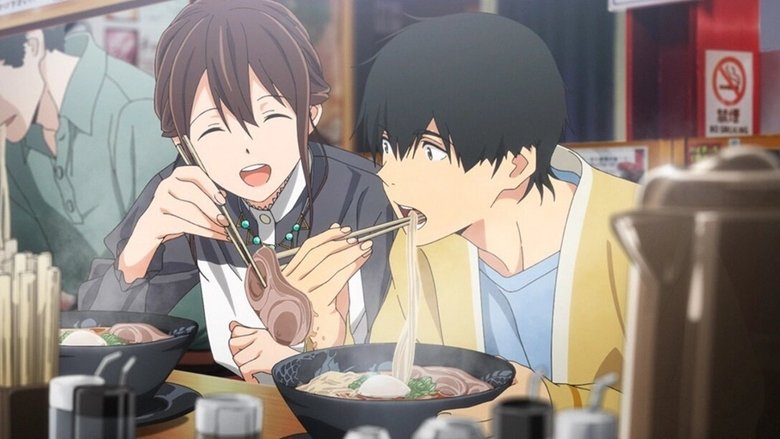
Restaurants, travel, jokes, and time together matter because Sakura refuses to let illness make her remaining life feel like a hospital schedule.
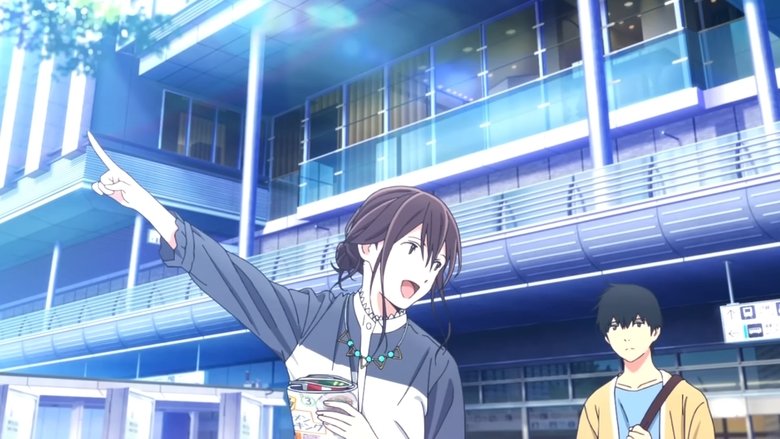
Sakura's persistence draws him out of solitary reading and challenges his belief that avoiding other people is safer than needing them.

The story rejects the expectation that a diagnosed illness makes death orderly, confronting Haruki with a loss that arrives outside the timeline he imagined.
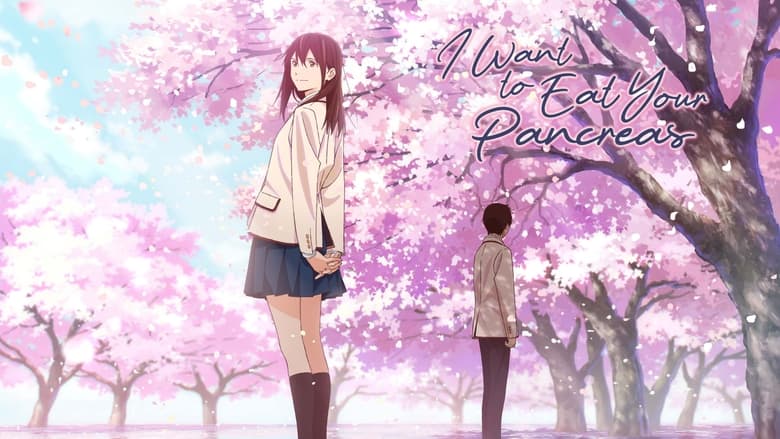
Sakura's words help Haruki recognize their mutual influence and take difficult first steps toward friendship with Kyoko and a less isolated future.
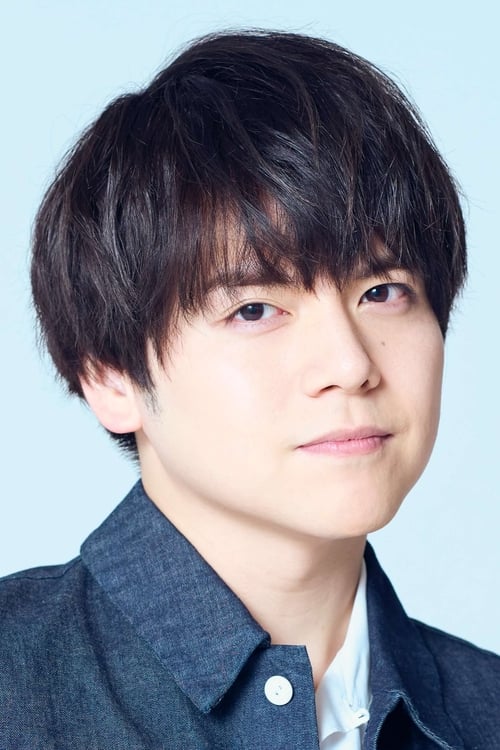
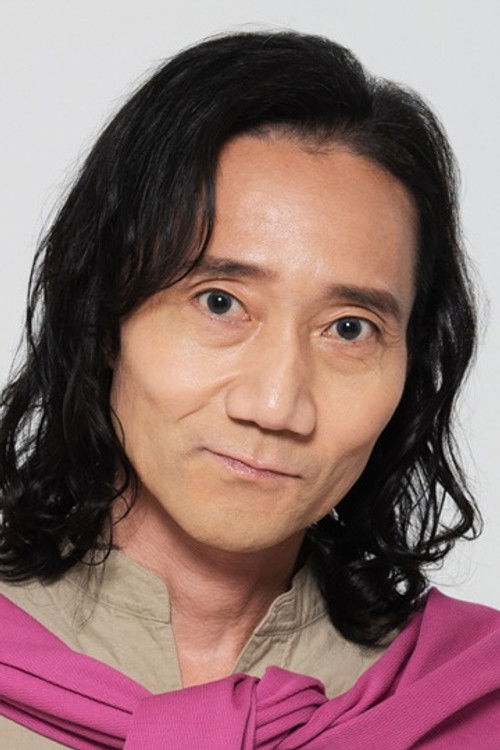
Main characters and performers
Theatrical runtime: 108 minutes.
Released Sep 2018.
Genres: Animation, Drama, Romance.
Studios / networks: ABC Animation, Aniplex, jeki.
TMDB user score: 8.2/10.
Rotten Tomatoes Popcornmeter: 93%.
Find streaming options, trailers, and related titles on MovieLinks.
Open on MovieLinks
More anime films to explore
An introverted student finds Sakura Yamauchi's diary and becomes the only classmate who knows she has a terminal pancreatic illness.
The title refers to an old belief that eating a healthy version of an organ could heal the same organ, and later becomes an intimate phrase expressing how completely the characters want to live within one another.
It contains romantic feeling, but the relationship is deliberately difficult to label; its central focus is how Sakura and Haruki change each other's approach to living.
Yes. The film adapts Yoru Sumino's novel, originally published online before its print release.
The listed runtime is 1 hour 48 minutes.
Availability varies by region. Use MovieLinks to compare current legal streaming options, dubs, and subtitles.